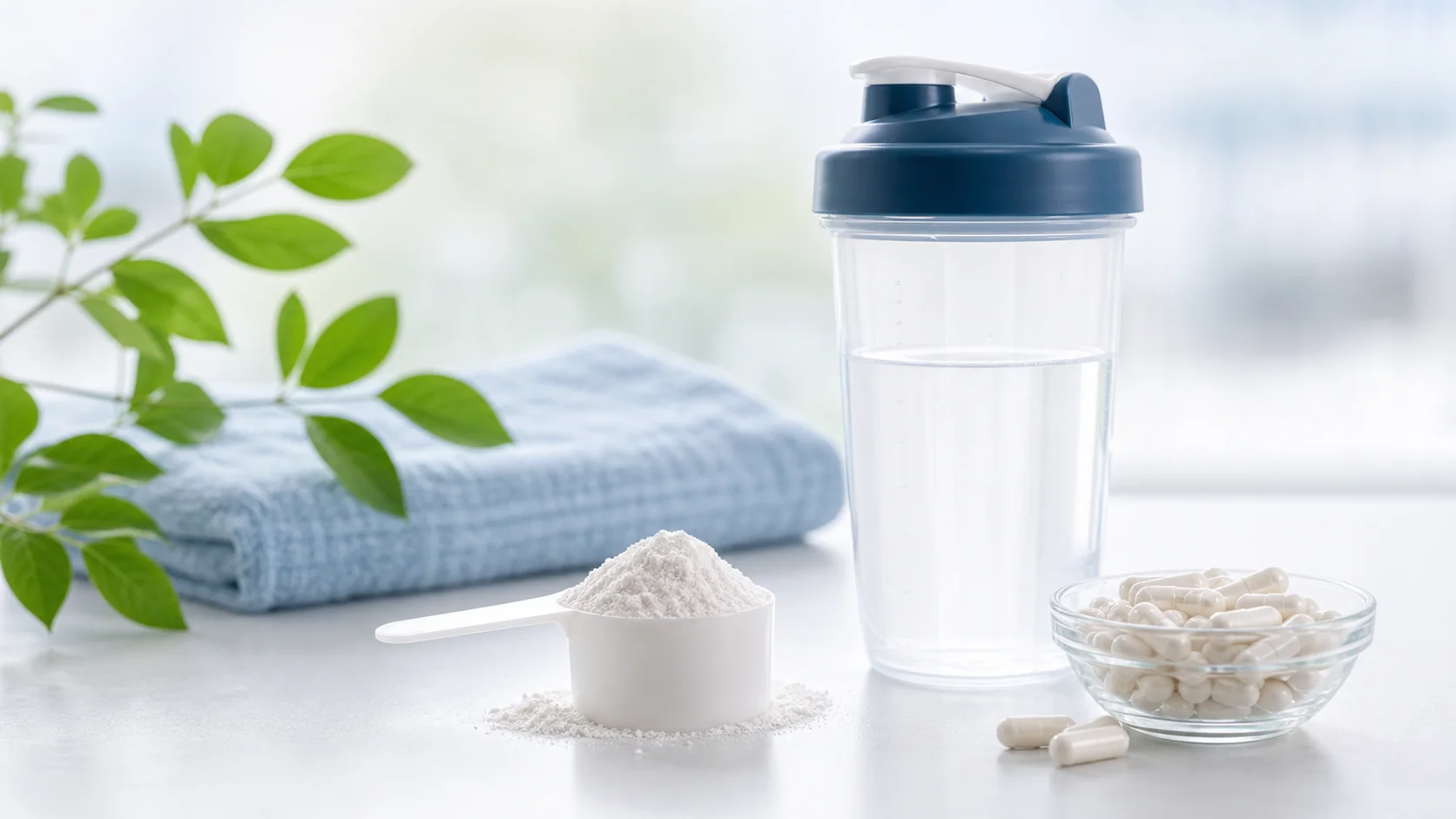
Creatine beyond sports nutrition: what U.S. brands and OEMs should watch
Creatine is no longer discussed only as a bodybuilding powder. In the U.S., the
more interesting shift is how a familiar ingredient is being reframed for women,
active aging, everyday strength and convenient formats. The opportunity is real,
but only when product design keeps pace with evidence, dose architecture and
finished-product stability.
Reviewed July 29, 2026Zewell-labs Sourcing TeamFor B2B product development
The strongest creatine opportunities connect a clear use case with a workable
format, verified specification and realistic quality plan.
Buyer summary
What U.S. ingredient buyers should take away
Keep the sourcing base familiar.
Creatine monohydrate remains the most established starting point; differentiation
should come from the audience, use occasion and finished-product experience.
Define one consumer job.
Women's nutrition and healthy aging are credible development directions when the
product brief is specific about life stage, routine and intended outcome.
Treat format as a technical decision.
Dry formats are generally simpler. Gummies, liquids and other water-containing
formats need validation in the actual matrix, packaging and shelf-life conditions.
Quote the project, not the trend.
Serving design, specification, format, annual volume, documents and destination
responsibilities should be clear before comparing final offers.
Market shift
The category is moving from “gym product” to “functional strength”
Creatine monohydrate remains a foundational sports nutrition ingredient. What is
changing is the way product teams frame the consumer problem. Traditional products
emphasized loading, strength and muscle gain. New briefs increasingly begin with
maintaining training consistency, supporting an active lifestyle, preserving
functional strength or making creatine easier to use outside the gym.
This is not a replacement of the sports market. It is an expansion of the occasions
and audiences around a well-known ingredient. The practical advantage for a brand is
that creatine already has high category recognition. The practical risk is that
attaching it to every wellness trend can quickly create vague positioning and weak
claims. A useful product brief still needs one primary audience, one clear use
occasion and one format that can deliver a credible product experience.
Decision for brands
Start with the job the consumer wants to complete: train consistently, maintain
strength through a life-stage transition, or use a convenient daily format. Do not
start with a long list of possible creatine benefits.
Audience change
Women's creatine needs more than a new color palette
The most useful development in women's creatine is the shift from asking “How do we
persuade women to take a men's sports product?” to asking which outcomes matter at
different life stages. A younger active consumer may prioritize training and
recovery. A midlife consumer may care more about maintaining strength, consistency
and confidence as sleep, stress and recovery patterns change.
Research on creatine in women is promising but not uniform. A lifespan review
describes plausible roles across performance, muscle function and brain energy,
while newer systematic reviews continue to show that outcomes depend on population,
protocol and whether supplementation is paired with resistance training. That makes
careful segmentation more valuable than broad “for all women” messaging.
For product teams, the differentiation can come from language, serving design,
education and the surrounding program rather than inventing an exotic creatine form.
Creatine monohydrate remains the most established sourcing foundation. The finished
concept should explain how the product fits a routine and what it does not replace.
Application opportunity
Healthy aging is strongest when it is expressed as capability
“Longevity” can be abstract. Strength, mobility and the ability to keep doing ordinary
tasks are easier for consumers to understand. That is why creatine is increasingly
relevant to healthy-aging product conversations: it can sit inside a broader plan
built around resistance exercise, adequate protein and maintaining physical function.
This direction also creates a more responsible commercial story. Rather than promising
that one ingredient prevents age-related decline, a brand can show how the formula
supports an active routine. The ingredient decision then becomes part of a larger
product system that may include protein, amino acids, vitamins, minerals or hydration
support depending on the intended application.
Buyers should be cautious with bone, cognition or disease-related language. Evidence
strength differs by outcome, and several reviews emphasize the importance of exercise
context. A strong healthy-aging concept uses the most mature evidence as its center and
treats emerging areas as research context, not guaranteed consumer results.
Formulation reality
Convenient formats create a stability question, not just a marketing opportunity
Powders remain commercially practical because creatine monohydrate is stable in the
dry state and can accommodate a meaningful serving. Gummies, liquids and other
water-containing formats are attractive because they reduce the “sports tub” barrier,
but they introduce a different development problem: creatine stability can be affected
by water, pH, temperature and time.
A launch-day assay is not enough for a shelf-stable product. The finished format should
be evaluated in its actual matrix, packaging and storage conditions. Product teams need
to understand how much creatine remains available through shelf life and whether
creatinine or other degradation markers are being monitored appropriately.
This does not mean new formats should be avoided. It means the format must earn its
positioning through technical validation. For an ingredient buyer, the right
conversation may include particle profile, blending behavior, target matrix, water
activity, pH, packaging and the OEM's stability protocol. A low ingredient quote cannot
compensate for a finished product that misses its intended specification.
Zewell sourcing framework
Match the opportunity to a format and a validation plan
A market opportunity becomes useful only after the intended audience, format and
technical risk are connected. This matrix is a starting point for a buyer brief, not
a finished-product claim or formulation recommendation.
Product direction
What creates value
What the buyer should validate
Core sports powder
Clear serving, easy daily use, reliable identity and assay.
Mesh or particle expectation, blending behavior, flavor system, packaging and serving economics.
Women's daily routine
Life-stage relevance, approachable education and a format that fits repeat use.
Audience-specific evidence, realistic serving, sensory experience and compliant communication.
Healthy-aging concept
Strength and capability positioning within a wider nutrition and activity plan.
Lower routine friction and differentiation from a traditional sports tub.
Active load, pH, water activity, temperature, packaging and assay through actual shelf life.
Zewell interpretation: For most new briefs, the safer sequence is
audience first, serving second, format third and quotation fourth. Reversing that
sequence often creates a convenient concept that cannot carry its intended dose or
remain within specification.
Sourcing implications
Six questions turn a trend into a workable creatine brief
Who is the primary consumer? Define the life stage and use occasion before selecting the format.
What is the core product promise? Separate training support, daily strength and broader wellness positioning.
What dosage form is realistic? Compare powders, capsules, tablets, stick packs and water-containing formats against serving and stability needs.
What specification matters? Confirm identity, assay, particle or mesh expectation, packaging and test methods where relevant.
What must be verified in the finished product? Align ingredient documents with the OEM's manufacturing and shelf-life plan.
What does the destination market require? Review label, claim, ingredient and finished-product responsibilities before launch.
These questions protect both sides. The buyer receives an offer based on the real
project, while the supplier can match a product and document route without pretending
that every creatine inquiry is identical.
Evidence boundaries
What this market signal does and does not prove
Research evidence: Creatine monohydrate is an established sports
nutrition ingredient, with a growing body of work involving women and older adults.
Outcomes still vary by population, protocol, exercise context and finished-product
design; the studies do not make every consumer, claim or dosage form equivalent.
Market interpretation: The audience and application directions in
this article are Zewell-labs' commercial interpretation of public evidence and current
product-development conversations. They are not demand guarantees.
This article is B2B market and sourcing analysis. It is not medical advice, a
finished-product claim recommendation or confirmation that a specific formula is
suitable for the U.S. market.
Build the sourcing brief before asking for the final price
Share the intended format, target market, quantity, specification, document needs and
timeline. Zewell-labs can help match a creatine monohydrate route to the real product
brief and prepare a practical quotation basis.